
- May 20, 2026
- By Sal Silvester
How Do Leaders Stay Grounded When Everything Around Them Keeps Changing?
AI disruption. Economic uncertainty. Shifting workplace expectations. Constant acceleration.
These are the realities leaders are navigating every day.
And one of the questions I hear most often from executives and teams right now is this:
How do you remain grounded, human, and effective when the environment around you keeps evolving?
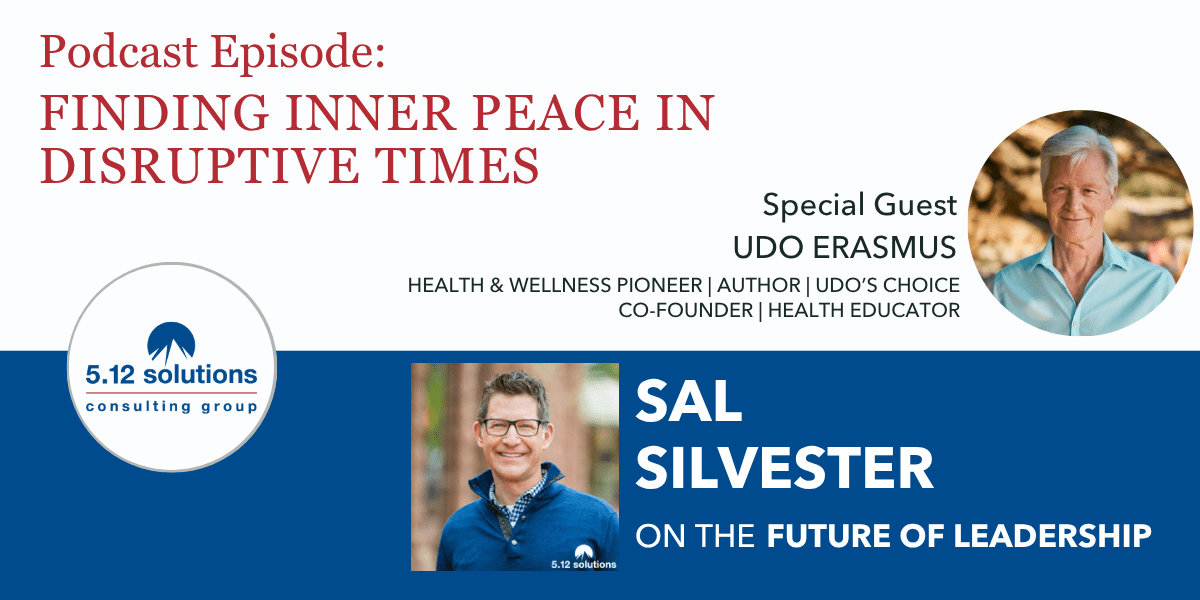
That question became the foundation of a recent conversation I had with wellness pioneer, author, and educator Udo Erasmus on the Future of Leadership Podcast. What emerged was not simply a discussion about wellness. It became a conversation about leadership, resilience, identity, and where leaders find stability during periods of disruption.
One insight stood out clearly for me throughout the discussion:
Leadership stability does not come from controlling uncertainty. It comes from developing greater internal clarity within it.
Why So Many Leaders Feel Disconnected Right Now
The pace of change in organizations continues to accelerate.
Leaders are balancing transformation initiatives, technology shifts, workforce pressure, performance expectations, and growing complexity across their businesses. In many cases, they are trying to support their people while also managing their own uncertainty behind the scenes.
The natural instinct during disruption is often to push harder, move faster, and tighten control.
But as Udo shared during our conversation, focusing only on external change creates instability internally.
When leaders become consumed by reacting to everything around them, they can lose the calm, clarity, and presence their Teams need most.
Grounded Leadership Starts with Internal Clarity
One of the themes I appreciated most from my conversation with Udo was his perspective that transformation begins with self-awareness.
Not reinvention.
Not performance theater.
Awareness.
Udo described transformation as a shift in focus away from constant external noise and toward a more grounded internal state.
That perspective aligns closely with much of the leadership work we do at 5.12 Solutions Consulting. Sustainable leadership growth is rarely just about tactics or strategy. It often starts with helping leaders become more intentional in how they think, respond, communicate, and show up under pressure.
Because leadership presence impacts everything:
- How conflict gets handled
- How trust gets built
- How Teams respond to uncertainty
- How decisions are made during pressure
- How culture evolves over time
The Leadership Skill Many Organizations Overlook
During our conversation, Udo talked about the importance of stillness and reflection.
Today’s leaders rarely slow down long enough to examine their own reactions, thought patterns, or emotional state. Yet without that awareness, it becomes difficult to lead intentionally.
What struck me most was how relevant that idea is for modern leadership.
The leaders who navigate disruption most effectively are often not the loudest voices in the room. They are the people capable of creating steadiness when others feel overwhelmed.
That steadiness creates trust.
When I asked Udo what helps people feel secure during uncertainty, his response was simple:
“Just being quietly present.”
There is a lot of leadership wisdom in that statement.
Presence is not passive. It is disciplined.
And in environments filled with constant pressure and distraction, it becomes increasingly valuable.
The Future of Leadership Will Require More Human Capacity
As technology continues reshaping the workplace, leadership effectiveness will depend even more heavily on uniquely human capabilities.
Organizations will still need execution, accountability, and strategic clarity. But they will also need leaders capable of building trust, emotional steadiness, resilience, and alignment during uncertainty.
That is not softer leadership.
It is stronger leadership.
And it may become one of the most important differentiators between organizations that simply react to disruption and those that grow through it.
FAQ: Leadership, Resilience, and Managing Change
Why are so many leaders struggling with uncertainty right now?
The speed of organizational, technological, and workplace change continues to increase. Many leaders are balancing performance pressure while simultaneously navigating ambiguity, disruption, and evolving expectations.
What does grounded leadership mean?
Grounded leadership refers to the ability to remain emotionally steady, clear-minded, and intentional during uncertainty. It helps leaders communicate more effectively, reduce reactivity, and build trust across Teams.
Why is self-awareness important in leadership?
Self-awareness helps leaders recognize how stress, pressure, and emotions affect their behavior and decision-making. Leaders with stronger self-awareness often create healthier communication patterns and stronger Team dynamics.
How can leaders become more resilient during disruption?
Resilience starts with creating internal stability. Practices like reflection, stillness, intentional communication, and emotional regulation help leaders respond more effectively during periods of uncertainty.
What leadership qualities will matter most in the future?
Emotional intelligence, adaptability, trust-building, resilience, communication clarity, and the ability to lead people through uncertainty will continue becoming increasingly important as workplaces evolve.