
What Is Thoughtload, and Why Are So Many Leaders Struggling With It?
Most leaders assume they’re overwhelmed because they have too much work.
So they work longer hours. Add more meetings. Become more efficient. Push a little harder.
The problem is, more effort isn’t always the answer.
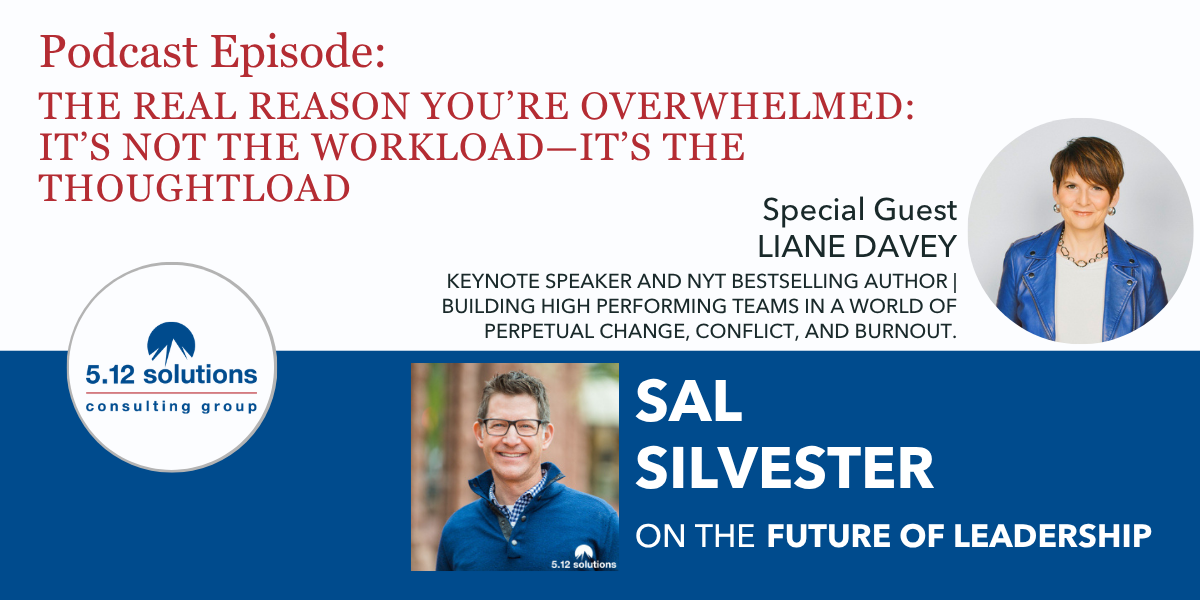
In my recent conversation with leadership expert and Thoughtload author Liane Davey, we explored a challenge that’s quietly affecting leaders across every industry. It’s called thoughtload, and for many leaders, it’s the real reason they feel exhausted even when they’re accomplishing more than ever.
Thoughtload isn’t about the number of tasks on your to-do list. It’s the mental weight of leading through uncertainty, making constant decisions, juggling competing priorities, switching contexts all day, and carrying responsibility that never fully turns off.
It’s the invisible work of leadership.
Over time, that invisible work chips away at your ability to think strategically, stay present with your people, and make the kind of decisions your organization needs from you.
The Hidden Cost of Leadership
Leadership today is fundamentally different than it was even a few years ago.
Complexity is higher. Change moves faster. Teams expect more communication, more clarity, and more connection. At the same time, leaders are navigating ambiguity that rarely comes with a clear playbook.
The challenge isn’t simply having too much to do.
It’s that your attention is constantly being pulled in different directions.
When your mental bandwidth is consumed by reacting, there’s little capacity left for anticipating what’s next.
That’s when leadership becomes transactional instead of transformational.
Signs Your Thoughtload Is Getting in the Way
Thoughtload rarely announces itself. Instead, it shows up in subtle ways that slowly impact both performance and relationships.

You may notice that:
- You finish every day exhausted but struggle to point to meaningful progress.
- You’re constantly switching between priorities without feeling fully present in any of them.
- Routine decisions take more energy than they should.
- Strategic thinking keeps getting pushed to “when things slow down.”
- Your team is waiting on decisions because your mental capacity is already stretched.
These aren’t signs that you’re failing as a leader.
They’re signals that your cognitive load has exceeded your capacity to process it effectively.
Better Leadership Starts With Better Attention
One of the most important insights from our conversation is this:
Leaders don’t create better outcomes by squeezing more into the day.
They create better outcomes by becoming intentional about where their attention goes.
Attention is one of your most valuable leadership resources.
When it’s fragmented, communication becomes reactive. Decisions become slower. Priorities become less clear. Your team feels it, even if they can’t explain why.
Healthy leadership isn’t about doing everything.
It’s about creating the mental space to focus on what matters most.
That means protecting your attention, simplifying unnecessary complexity, making fewer low-value decisions, and intentionally creating room for strategic thinking.
Because when leaders think more clearly, teams perform better.
A Question Worth Asking
If you’ve been working harder but feel like you’re making less progress, this conversation with Liane Davey offers a different perspective.
She shares practical strategies for reducing thoughtload, protecting your mental energy, and leading with greater clarity during periods of constant change.
As you listen, consider one question:
Are you managing your thoughtload, or is your thoughtload managing you?
Feeling Mentally Stretched By Constant Change?
Download our free Navigating Change Toolkit and get practical frameworks to simplify priorities, communicate with confidence, and lead through uncertainty without carrying it all yourself.
📌 Access your free toolkit today.
Leadership Thoughtload FAQs
What is thoughtload?
Thoughtload is the cumulative mental effort required to lead. It includes making decisions, managing uncertainty, shifting between priorities, solving complex problems, and carrying the emotional responsibility that comes with leadership. Unlike workload, thoughtload focuses on the cognitive demands of leading.
How does thoughtload affect leadership?
When thoughtload becomes too high, leaders experience reduced focus, slower decision-making, increased mental fatigue, and less capacity for strategic thinking. It can also affect communication, relationships, and a team's ability to move forward with confidence.
What's the difference between workload and thoughtload?
Workload is the volume of work you need to complete. Thoughtload is the mental energy required to process complexity, make decisions, navigate uncertainty, and lead people. You can have a manageable workload while still experiencing overwhelming thoughtload.
How can leaders reduce thoughtload?
Reducing thoughtload starts with becoming intentional about your attention. Clarify priorities, eliminate unnecessary complexity, delegate decisions that don't require your involvement, create protected time for strategic thinking, and build habits that preserve your mental energy instead of constantly draining it.
Why does thoughtload increase during organizational change?
Change creates uncertainty. Uncertainty increases decisions, communication demands, and the cognitive effort required to lead. Leaders who actively manage their thoughtload are better equipped to think clearly, adapt quickly, and create the clarity their teams need to navigate change with confidence.