
What does it really take to make organizational change stick?
Organizations invest enormous amounts of time, money, and energy into transformation. They develop thoughtful strategies, build detailed plans, and communicate a compelling vision. Yet, despite their best efforts, meaningful change often falls short.
Why? Because even the best strategy can fail when leaders overlook the human side of change.
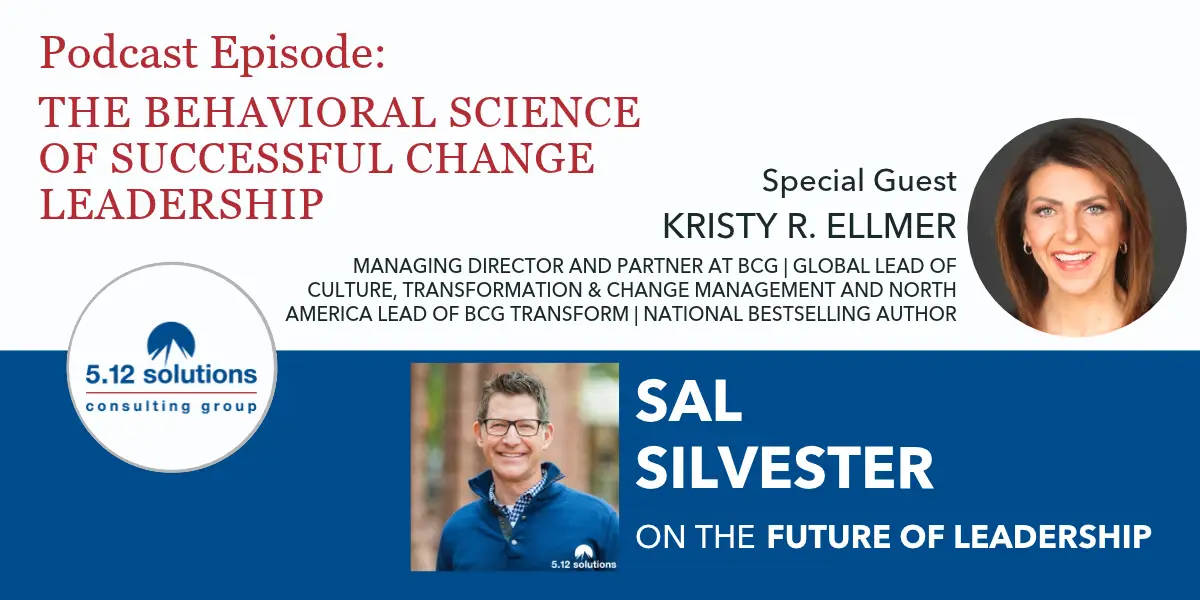
In this episode of the Future of Leadership Podcast, we sit down with Kristy Ellmer, Managing Director and Partner at Boston Consulting Group (BCG) and co-author of How Change Really Works, to unpack the science behind successful organizational transformation.
The Hidden Barriers to Lasting Organizational Change
One of the biggest challenges in transformation is false alignment, when leadership teams appear to agree on a direction but lack the shared understanding and commitment needed to execute it.
That disconnect can ripple throughout an organization, creating confusion, resistance, and stalled progress.
And while communication is essential, simply telling employees what’s changing and why isn’t enough. People need to feel a sense of ownership in the process. They need opportunities to contribute, influence decisions, and have agency in how change unfolds.
From Change Management to Behavior Change
Real transformation happens when new behaviors become part of how people work every day.
We explore how leaders can move beyond traditional change management approaches by creating the conditions for people to embrace change, take ownership, and sustain momentum when things get difficult.
Their conversation examines the leadership behaviors, everyday rituals, and practical approaches that help turn transformation from a strategic initiative into lasting organizational progress.
The Human Side of AI Transformation and Change Leadership
As organizations accelerate AI adoption, leaders face a challenge that goes far beyond implementing new technology. AI is changing how people work, but it’s also challenging how they see themselves and the value they bring.
Kristy explains that employees may resist AI-driven change because the tasks being automated are often tied to their professional identity, motivation, and sense of fulfillment. Leaders who overlook these deeper human concerns risk creating resistance, even when the business case for AI is compelling.
Research underscores just how much leadership matters in AI transformation. According to BCG’s 2025 AI at Work survey, 55% of employees feel positive about generative AI when they receive strong leadership support, compared with just 15% without it. Yet only about one-quarter of frontline employees report receiving that level of support.
For leaders, the message is clear: successful AI adoption depends on how well you support the people expected to change.
How Leaders Sustain Organizational Change Through the “Messy Middle”
Launching a transformation is often the easy part. Sustaining momentum when the excitement fades is where leadership gets tested.
Kristy calls this the “messy middle,” the period when competing priorities, change fatigue, and unexpected challenges threaten progress. It’s also where lasting behavioral change takes shape.
Rather than pulling back when transformation gets difficult, leaders need to double down on the habits and disciplines that support progress. Consistent leadership rituals, ongoing accountability, and reinforcement of new behaviors help organizations move through the inevitable plateaus of change.
The real work of transformation happens long after the kickoff meeting.
The takeaway? Change doesn’t stick because a strategy makes sense on paper. It sticks when people understand it, own it, and change how they show up.
If you’re leading organizational transformation, navigating a major transition, or helping your team adopt new ways of working, this episode offers a fresh, science-based perspective on what makes change successful.
Turn Change Leadership Insights Into Action
Understanding why organizational change fails is one thing. Leading your team through it takes a plan.
Our FREE Navigating Change Toolkit gives leaders practical resources to communicate change more effectively, align priorities, and help teams move forward when uncertainty sets in.
Get access to our Change Plan Worksheet, Change Map, communication planning resources, and more.
Get Your Free Navigating Change Toolkit
FAQs About Behavioral Science Around Organizational Change
Why do organizational change initiatives fail?
Organizational change often fails because leaders focus on strategy and execution without addressing the human behaviors needed to make change stick. Even a strong transformation plan can stall when leadership teams lack alignment, employees feel excluded from decisions, or new ways of working aren't consistently reinforced.
What is the role of behavioral science in organizational change?
Behavioral science helps leaders understand how people think, feel, and respond to change. By recognizing individual motivations, habits, and psychological barriers, organizations can design change strategies that encourage employee ownership, reduce resistance, and support lasting behavior change.
How can leaders reduce employee resistance to change?
Leaders can reduce resistance by involving employees early, understanding what motivates them, and giving them meaningful opportunities to influence how change happens. Clear communication matters, but employees also need agency and a personal connection to the transformation.
Why is leadership alignment important during organizational transformation?
Leadership alignment ensures executives share a clear understanding of the transformation's goals, priorities, and required behaviors. Without genuine alignment, leaders may communicate conflicting messages, make inconsistent decisions, and undermine employee confidence in the change process.
How does AI adoption affect organizational change management?
AI adoption introduces challenges that extend beyond technology and training. Employees may question how automation affects their professional identity, job satisfaction, and future value. Successful AI transformation requires leaders to address these concerns while strengthening critical thinking, emotional intelligence, and other essential human capabilities.