

How Does Psychological Safety Improve Leadership Decision-Making?
Psychological safety improves leadership decision-making by helping employees, managers, and executives raise concerns, challenge assumptions, and share critical information without fear of negative consequences. When leaders create space for honest dialogue, they gain better visibility into risks, hear perspectives they might otherwise miss, and make more informed decisions.
When Silence Becomes a Leadership Blind Spot
I remember facilitating a leadership team workshop and hearing one of the key executives say, “I never got fired for keeping my mouth shut.”
Ouch. Not exactly the kind of behavior expected from top level leaders.
And probably a good indicator of a lack of psychological safety on the team.
That comment has stuck with me because it captures a problem we’ve seen across organizations: people often know something important but decide it’s safer not to say it.
An employee identifies a customer problem. A manager recognizes a process that’s failing. A director sees an emerging risk.
But somewhere along the way, the message gets softened, delayed, or filtered out entirely.
By the time the executive team makes a decision, the information it needs may be incomplete.
Why Psychological Safety Matters Beyond the C-Suite
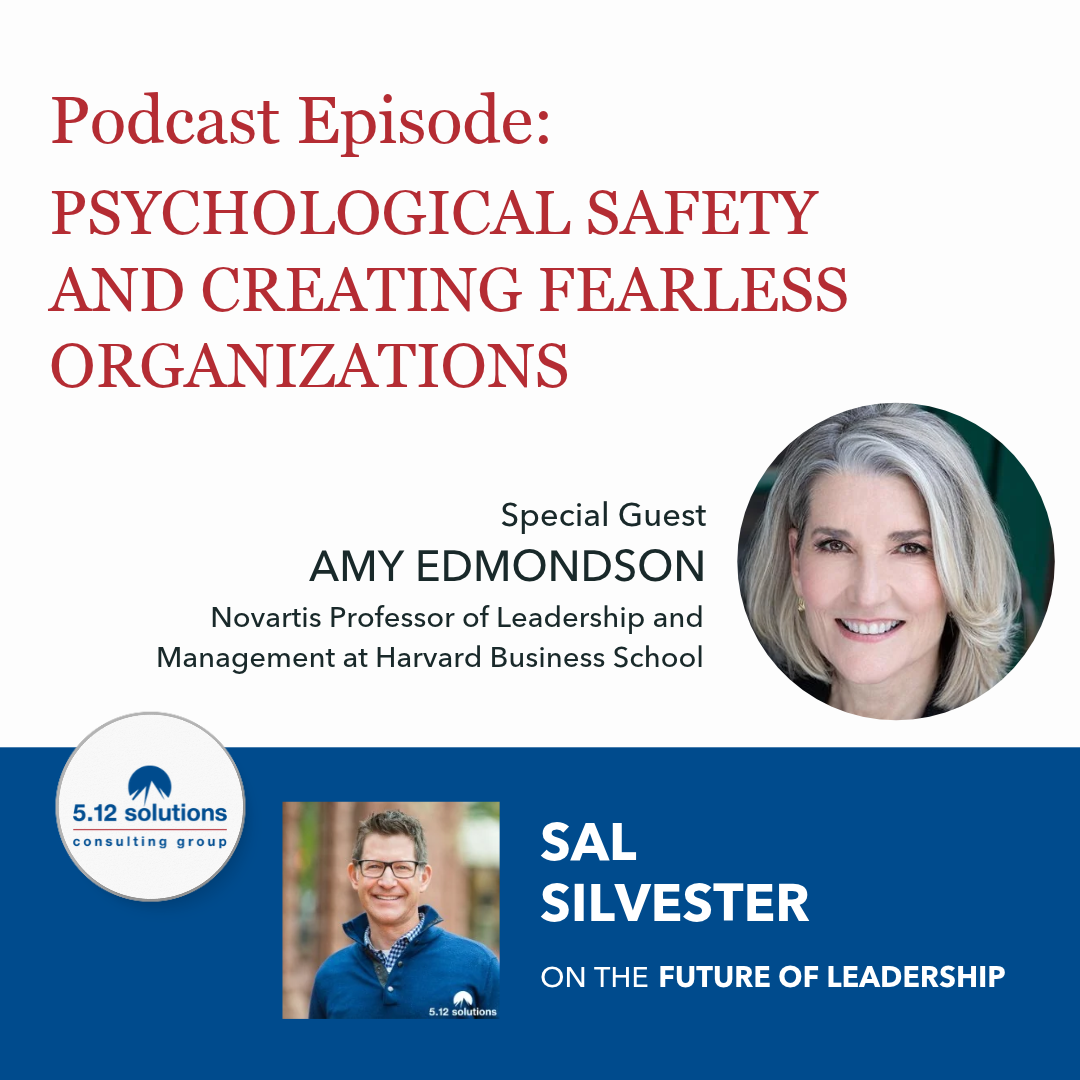 Psychological safety has been central to our work with leadership teams for years. We even had the opportunity to interview Harvard Business School professor Amy Edmondson, whose research helped bring the topic into the leadership conversation.
In our Future of Leadership podcast episode with Amy Edmondson, we explored how psychological safety operates within hierarchical organizations and why it matters when people bring different perspectives to the table.
One of the most important implications for leaders is this: the higher you sit in an organization, the easier it can be to lose sight of what’s happening below you.
That’s why creating psychological safety can’t stop with the executive team. Managers and directors need to feel comfortable escalating concerns, and employees need confidence that their perspectives will be heard.
Otherwise, the people making the biggest decisions may be missing the information that matters most.
That’s why psychological safety matters at every level.
How Psychological Safety Improves Leadership Decisions
Executives make consequential decisions about strategy, investments, talent, and organizational change.
But they rarely have firsthand visibility into everything those decisions affect.
They depend on the people around them to share what’s actually happening.
And that’s where things get complicated.
Employees may hesitate to raise concerns. Managers may feel pressure to present positive results. Directors may avoid escalating problems without a solution.
Each decision to withhold information seems small.
Collectively, those decisions create organizational blind spots.
The question isn’t whether your organization has valuable insights. It’s whether those insights can reach the people who need them.
Why Honest Dialogue Matters at Every Level
According to Gallup’s employee engagement research, only 26% of U.S. employees strongly agree their opinions count at work.
Meanwhile, Gallup’s leadership research reports that only 19% strongly agree they trust their organization’s leadership.
These findings aren’t specific to executive teams, but they highlight why leaders must pay attention to how information moves through their organizations.
When people believe their perspectives matter, organizations are better positioned to:
- Identify emerging risks before they escalate.
- Challenge assumptions behind important decisions.
- Share frontline insights that leaders might otherwise miss.
- Adjust direction when new information changes the picture.
The responsibility begins with senior leadership, but it extends to everyone who influences decisions.
Four Ways Leaders Can Improve the Flow of Honest Information
1. Ask Better Questions Before Making Decisions
We’ve seen leadership teams move quickly toward agreement without examining the information behind a recommendation.
Before committing to a direction, ask:
“What are we hearing from the people closest to the work?”
“What information might challenge our assumptions?”
These questions encourage leaders to look beyond their immediate circle.
2. Make It Easier to Escalate Concerns
Not every concern needs to reach the CEO. But important information shouldn’t disappear because someone is uncomfortable raising it.
Managers and directors play a critical role here.
When an employee identifies a problem, do we investigate it or explain it away?
When a team challenges a decision, do we explore the reasoning or label them resistant?
The way leaders respond determines whether people continue sharing what they know.
3. Distinguish Bad News From Poor Performance
One of the fastest ways to restrict honest dialogue is to treat the person delivering difficult information as the problem.
A missed target, failed initiative, or unexpected customer issue deserves attention.
But punishing the messenger teaches people to manage appearances rather than address reality.
We encourage leaders to respond with curiosity.
“What can we learn?”
“What needs to change?”
That approach creates room for earlier intervention and better decisions.
4. Show People Their Input Makes a Difference
Inviting feedback is only the beginning.
People also need to understand what happened to the information they shared.
Was it considered? Did it influence the decision? If not, why?
Closing that loop matters.
When leaders explain their reasoning, they reinforce that honest input has value, even when it doesn’t change the final outcome.
The C-Suite Sets the Standard, but Everyone Shapes the Conversation
Psychological safety becomes most valuable when it changes how an organization operates under pressure.
When results disappoint or priorities shift, can people raise concerns without becoming defensive?
Can managers bring difficult information to senior leaders?
Can executives reconsider a decision when new evidence emerges?
These behaviors require practice.
Ready to Improve How Your Executive Team Communicates and Makes Decisions?
Through our Team Acceleration program, we help leadership teams strengthen relationships and build the habits that support better communication and accountability.
Because honest dialogue doesn’t happen through good intentions alone. It happens when leaders consistently demonstrate that information matters more than appearances.
How does psychological safety improve organizational decision-making?
It helps employees and leaders share concerns, identify risks, and challenge assumptions before decisions are finalized. This gives decision-makers access to more complete information.
What role do middle managers play in psychological safety?
Middle managers connect frontline experience with senior leadership. Their responses to concerns influence whether important information gets escalated or lost.
How can leaders encourage employees to share difficult information?
Ask specific questions, respond without defensiveness, and explain how feedback influenced decisions. Consistency builds confidence that speaking up is worthwhile.