
How Do You Move Fast Without Burning People Out?
Speed has become a competitive advantage. But for many organizations, the pursuit of speed comes with an unintended consequence: burnout.
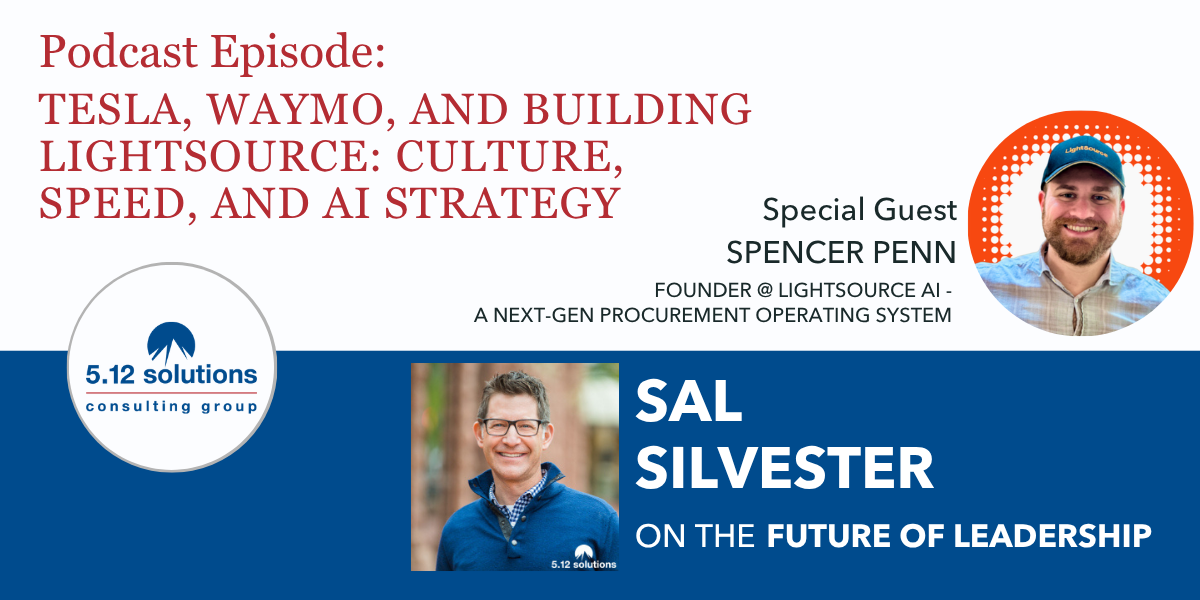
In a recent episode of the Future of Leadership podcast, we sat down with Spencer Penn, whose career has placed him at the center of some of the most transformative companies of the last decade. From Tesla during the Model 3 era, to Waymo’s autonomous driving revolution, to founding LightSource, Spencer has experienced firsthand what it takes to build organizations that innovate at scale.
One of the most compelling themes from the conversation was the relationship between culture and execution.
At Tesla, Spencer described a culture that could be characterized as a “flat organization with vertical power.” While organizational layers were minimized, decision-making authority remained concentrated. The result was extraordinary speed and relentless focus.
Waymo approached things differently. The organization maintained more structure while empowering individuals throughout the company to influence outcomes. Spencer described it as a culture with grassroots power, where ideas could emerge from anywhere and gain traction through collaboration and expertise.
The lesson for leaders isn’t choosing one model over the other. It’s creating clarity around how decisions get made, where authority lives, and how people contribute.
Building High-Performance Teams Without Creating Burnout
The conversation also explored one of today’s most pressing leadership challenges: maintaining urgency without exhausting people.
Aggressive goals can unlock creativity and focus, but sustained performance requires leaders to create environments where people can thrive over the long term. As Spencer builds LightSource, he is intentionally shaping a culture that embraces ambitious goals while remaining grounded in values, trust, and human sustainability.
Key Takeaways for Leaders
- Culture shapes execution more than organizational charts.
- Aggressive timelines can drive innovation, but only when paired with sustainable leadership practices.
- High-performing organizations balance results and relationships.
- AI strategy should start with business challenges, not technology.
- Automation will likely create the biggest impact in repetitive, workflow-driven tasks first.
Why AI Strategy Should Start with Business Problems, Not Technology
The discussion concluded with a practical perspective on artificial intelligence. While AI dominates headlines, Spencer believes most organizations are still early in their adoption journey. Rather than asking what AI tools to implement, leaders should first identify friction points, repetitive work, and opportunities to improve how work gets done.
The future belongs to organizations that can adapt quickly, learn continuously, and build cultures where people perform at their best. Whether the challenge is scaling a company, leading through transformation, or navigating AI adoption, culture remains the foundation that makes sustainable performance possible.
Free Team Assessment Toolkit for Leaders and Teams
Want to assess the health of your team’s culture?
Download our Free Team Assessment Toolkit to explore the Human Workplace Needs Model, evaluate trust and team dynamics, and identify opportunities to strengthen collaboration, communication, and performance across your organization.
Download the Free Team Assessment Toolkit → https://512solutions.com/team-assessment-toolkit/
FAQs
What leadership lessons can organizations learn from Tesla and Waymo?
Tesla and Waymo demonstrate that there is no single blueprint for success. Tesla emphasized speed through a flatter organizational structure and concentrated decision-making, while Waymo empowered influence throughout the organization. Both approaches highlight the importance of clarity, accountability, and culture.
How can leaders create urgency without causing burnout?
Leaders can create urgency by setting ambitious goals while maintaining clear priorities, healthy team dynamics, and sustainable expectations. High-performing teams balance results with relationships and recognize that long-term performance depends on people, not just processes.
What is the biggest mistake organizations make with AI strategy?
Many organizations start with technology instead of business challenges. Effective AI adoption begins by identifying workflow inefficiencies, repetitive tasks, and opportunities where automation can create measurable value.
What does a high-performance culture look like?
A high-performance culture combines accountability, trust, adaptability, and clear decision-making. People understand how to contribute, feel empowered to take action, and can perform at a high level without sacrificing well-being.
Why does organizational culture matter during transformation?
Culture influences how quickly teams adapt, collaborate, and execute. During periods of change, a healthy culture creates the trust, alignment, and resilience necessary to sustain performance and achieve business goals.